
Should You Buy an RTX Spark? 128GB Laptop vs. Two L40S GPUs: The Break-Even Math
A 128GB-memory laptop—is it actually worth the price? That’s the question many people have been asking about the RTX Spark. With its advertised 1 PFLOP of AI compute and 128GB of unified memory, it sounds like a data center crammed into a chassis. But before putting money down, everyone wants to know three things: Is it faster than the cloud GPUs I’m renting now? Will it actually save money in the long run? And—why is it selling at all?
This article does the math line by line: we use an official Blender scene to benchmark the GB10 against two L40S GPUs, then lay out the payback periods for both renting and buying. The conclusion may run counter to intuition—this machine’s real value is not raw compute, but the models that fit within its 128GB of memory.

I. First, Let’s Break Down Today’s Cloud Bill: Where the ¥60 Per Hour Goes
Anyone who does 3D rendering knows the pain of cloud GPU bills. A common configuration is 2 L40S GPUs plus a 64-core CPU and 128GB of memory, for a list price of roughly ¥60 per hour:
| Billing item | Unit price (per hour) |
|---|---|
| 2 × L40S GPUs | ¥26.21 |
| 64-core CPU | ¥20.29 |
| 128GB memory | ¥13.71 |
| Total | About ¥60 |
Interestingly, the CPU and memory account for nearly half the total, while the GPUs make up just over 40%. Rendering may run on the GPUs, but main-thread logic, scene compositing, color management, and similar work all consume CPU and memory.
At this rate, a month easily exceeds ¥10,000, and during a rendering-heavy month, the bill can burn through more than ¥300 a day. When NVIDIA then announces a laptop with 128GB of memory and an advertised 1 PFLOP of AI compute, it would be hard not to be tempted: buy one, cancel your cloud instances, and cut your costs to zero?
That is where this test comes in. We rented a machine with the same chip and ran an official Blender test scene, comparing it against our two L40S GPUs with exactly the same scene and settings.
II. RTX Spark and DGX Spark Actually Use the Same Chip
Let’s play spot the difference: on the left is a 2025 DGX Spark promo video; on the right is the 2026 RTX Spark. Play them together and the two chips fly toward each other, merge, and light up with virtually identical motion.
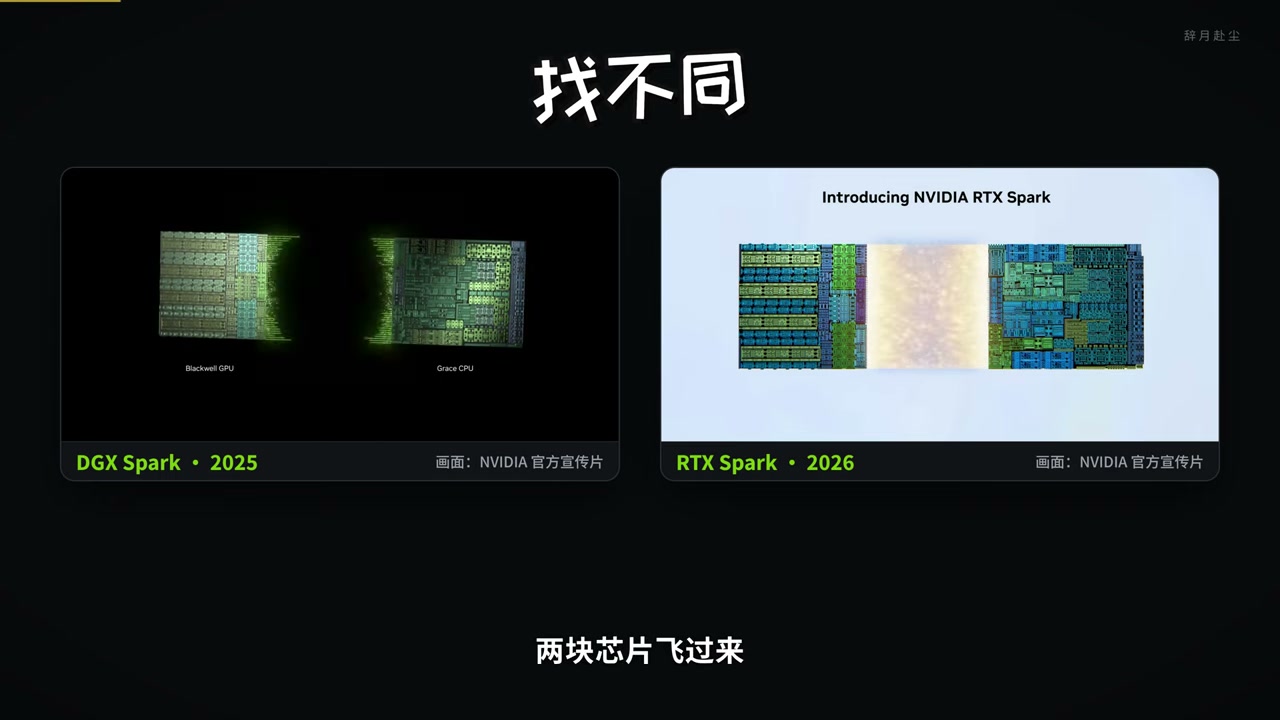
The chips also have different names: the one on the left is the GB10, while the promo on the right calls it the N1X. But put the two die photos side by side and the answer becomes obvious—they are the same chip.
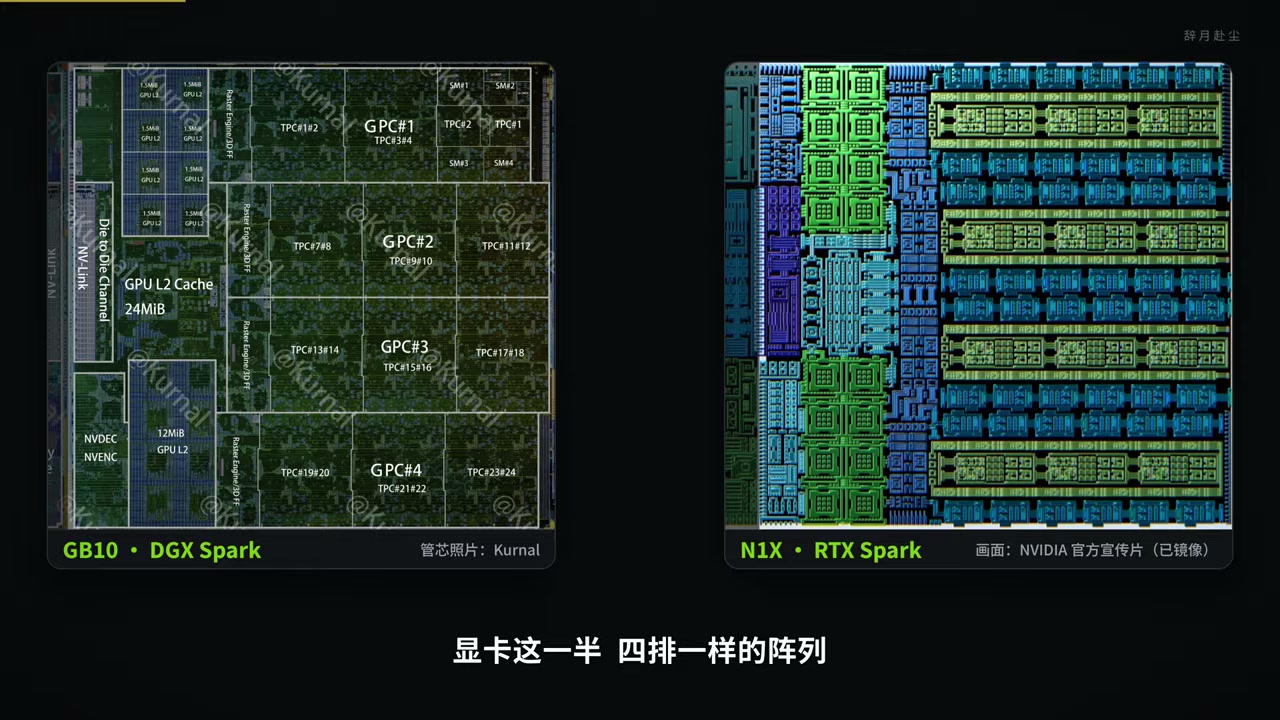
The match is exact:
- GPU half: Four identical arrays with 6144 CUDA cores in total—the same number as the desktop RTX 5070
- CPU half: 10 large blocks plus 10 small blocks, developed with help from MediaTek, with every position lining up
- On paper: The GPU, CPU, memory, and AI compute are essentially identical
The only difference is power consumption. Both desktop DGX Spark and RTX Spark models draw 140W, while the laptop version is limited to 45–80W, shaving off a little more performance.
In other words, the “little gold box” NVIDIA sold to AI developers last year has been transplanted unchanged into a Windows laptop this year. The logic is familiar: it is the same idea behind Apple’s move to unified memory in the MacBook—to get large models running, you first have to enlarge the memory pool.
Here are the full specs:
| Specification | N1X / GB10 |
|---|---|
| CUDA cores | 6144 (same as the desktop RTX 5070) |
| CPU | 20-core Arm (co-designed with MediaTek) |
| Unified memory | 128GB, shared by the CPU and GPU |
| Power consumption | 140W desktop, 45–80W laptop |
| Advertised AI compute | 1 PFLOP |
The most eye-catching spec is still that 128GB. NVIDIA has a reputation as the “Chopper,” and VRAM is where its cuts have always been sharpest: the RTX 5060 gets 8GB, while even the flagship 5090 has only 32GB. Suddenly, a laptop comes with 128GB—indeed, that was enough to make people blink. How did it suddenly become so generous?
III. Hands-On Test: GB10 Is Nearly 7× Slower Than 2 L40S GPUs
The test setup was simple: a rented GB10, at about ¥5 per hour, against two L40S GPUs, at about ¥60 per hour, using the same official Blender scene, identical Cycles settings, and the same 90 frames.
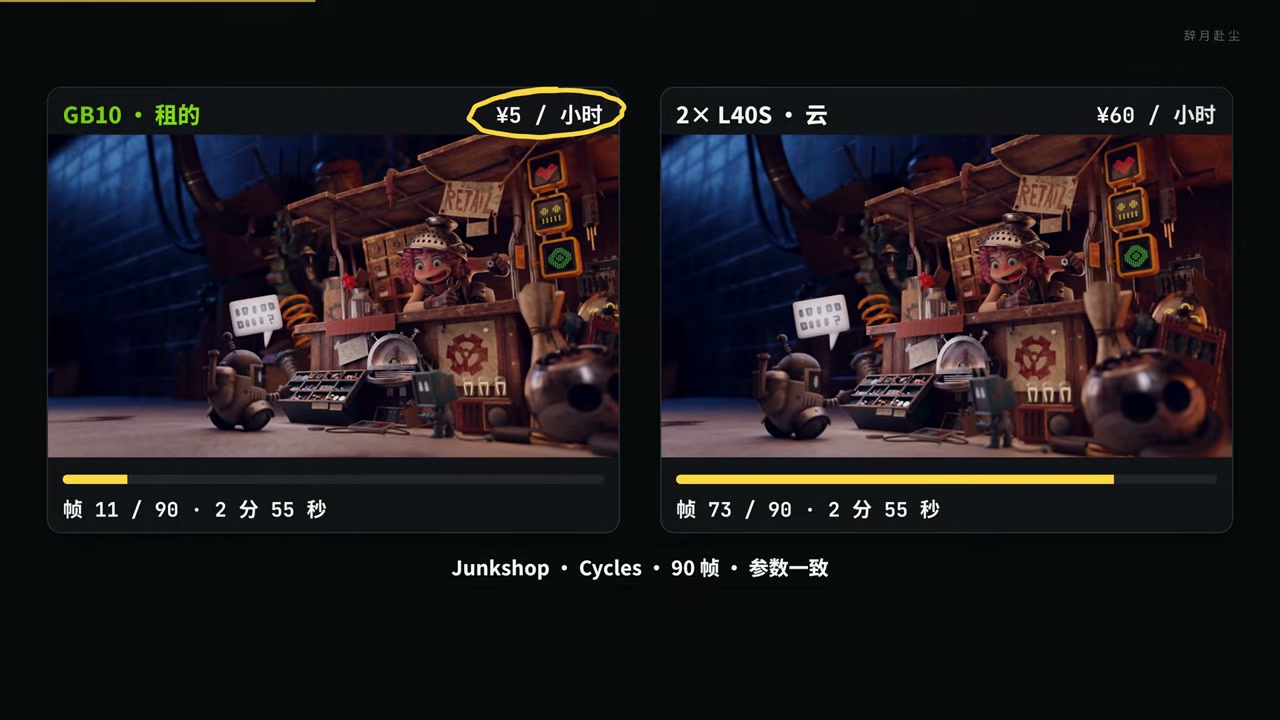
The result was unambiguous: the L40S setup finished first, while the GB10 was nearly 7× slower.
Could this simply be a case of not knowing how to use the hardware? We recorded GPU utilization on both sides. During rendering, both L40S GPUs ran at 99%, and the GB10 was fully loaded too—there were no idle resources on either side. The gap was real, with both systems operating at full tilt.
The hardware numbers line up:
| Comparison | 2 × L40S | GB10 |
|---|---|---|
| CUDA core count | 36000+ | 6144 |
| Power consumption | ~700W | 140W |
| VRAM | 2 × 48GB | 128GB unified memory |
The core-count gap alone is nearly 6×. So the result is no mystery; it simply puts the “little gold box’s” positioning in perspective: its value lies not in throughput, but in capacity.
One caveat is that tests like this have inherent limitations. The scene, ray-tracing sample count, and degree of CPU involvement all affect the results, while rendering backends differ between GPU architectures. Drawing broad conclusions about which GPU is better from a single scene is not rigorous. For absolute performance in production workloads such as Blender, Octane, or V-Ray, you should consult more systematic evaluations.
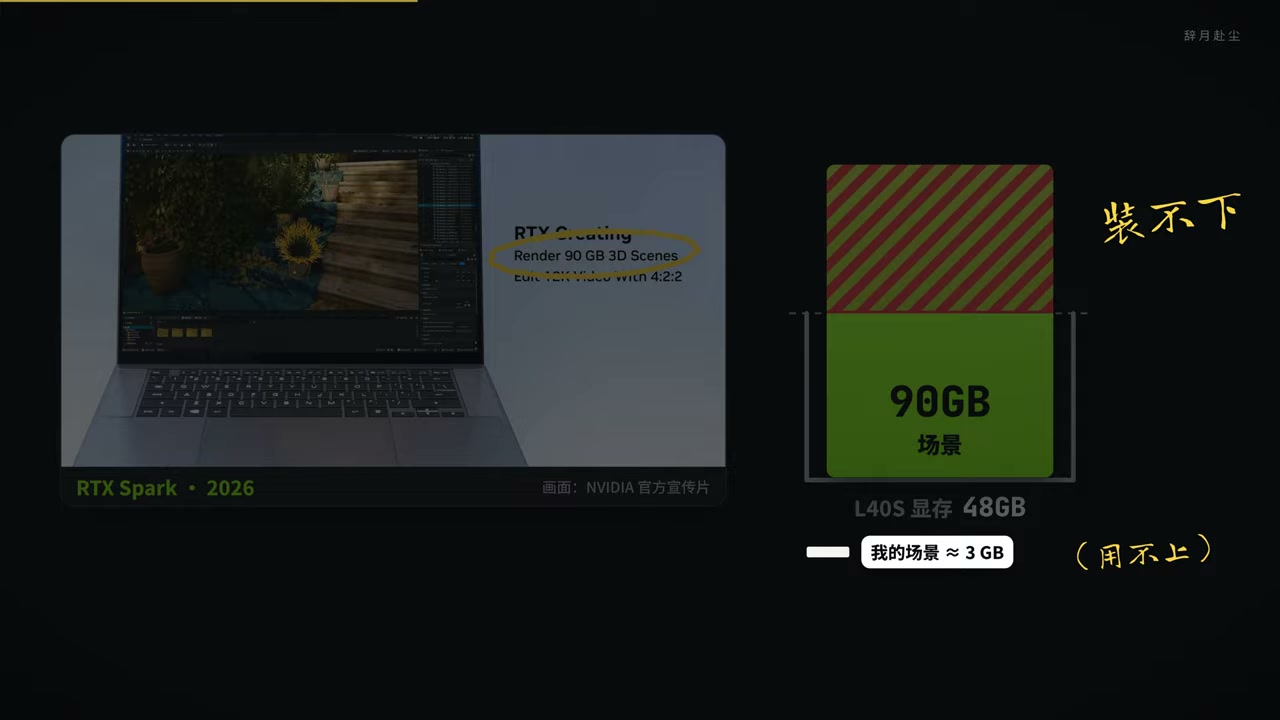
However, NVIDIA itself has acknowledged a limitation: it advertises rendering enormous 90GB scenes, which simply do not fit in the 48GB of VRAM on a single L40S. This is the true moat of 128GB unified memory—not “it renders faster,” but “it could never render that scene in the first place.”
IV. The Math: Renting Is Cheaper, While Buying Takes Eight Months to Break Even
Slow does not necessarily mean expensive. Let’s put the unit prices side by side:
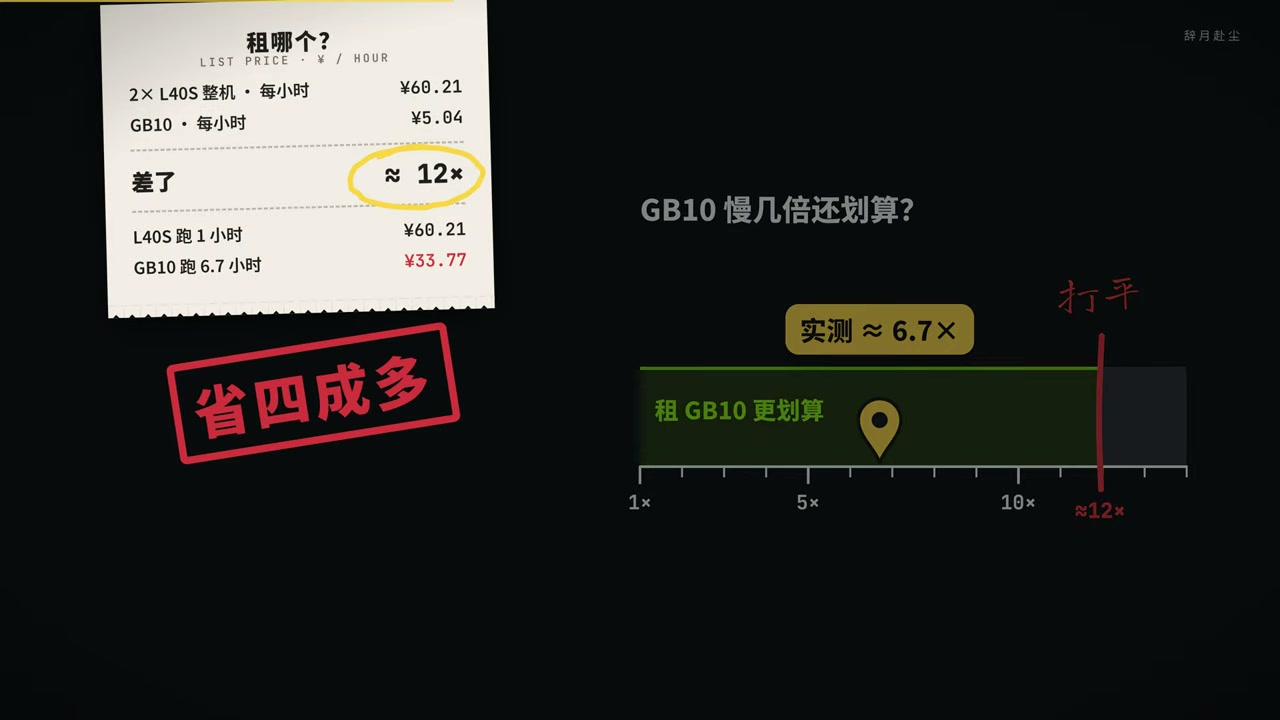
| Option | Price | Cost of one identical job |
|---|---|---|
| 2 × L40S | ¥60.21 / hour | 1 hour, ¥60.21 |
| GB10 | ¥5.04 / hour | 6.7 hours, ¥33.77 |
The price gap is about 12×, while the measured performance gap is 6.7×. As long as it is no more than 12× slower, renting the GB10 offers better value, and our test showed that the same job costs more than 40% less. That is the math behind “slow does not mean expensive.”
What about buying it outright? The 128GB RTX Spark desktop’s Microsoft list price works out to a little over ¥40,000. Assuming it runs around the clock, it could replace more than ¥6,000 in cloud charges per month, which sounds like a payback period of just over six months. But there are two hard problems:
First, one machine cannot finish the work. The jobs you currently handle would take more than 1,000 hours on it, while a month contains only 720 hours. You would need to buy two, for ¥80,000, pushing the payback period out to around eight months.
Second, you have to wait. A 4K final that used to take an hour and a half now takes 10 hours. You can only start the render before bed and check the result in the morning.
The machine can eventually pay for itself, but at this speed, buying one solely for rendering is still a tough sell.
V. Counting on API Savings? That Case Is Even Weaker
Let’s try a different angle: instead of buying it for rendering, use it to run large models locally and save on API costs. That brings in another name.

DeepSeek’s off-peak API price is just ¥4 for one million output tokens. For ¥40,000, you can buy 10 billion tokens. Meanwhile, this computer runs an 8-billion-parameter model at a little over 50 tokens per second.
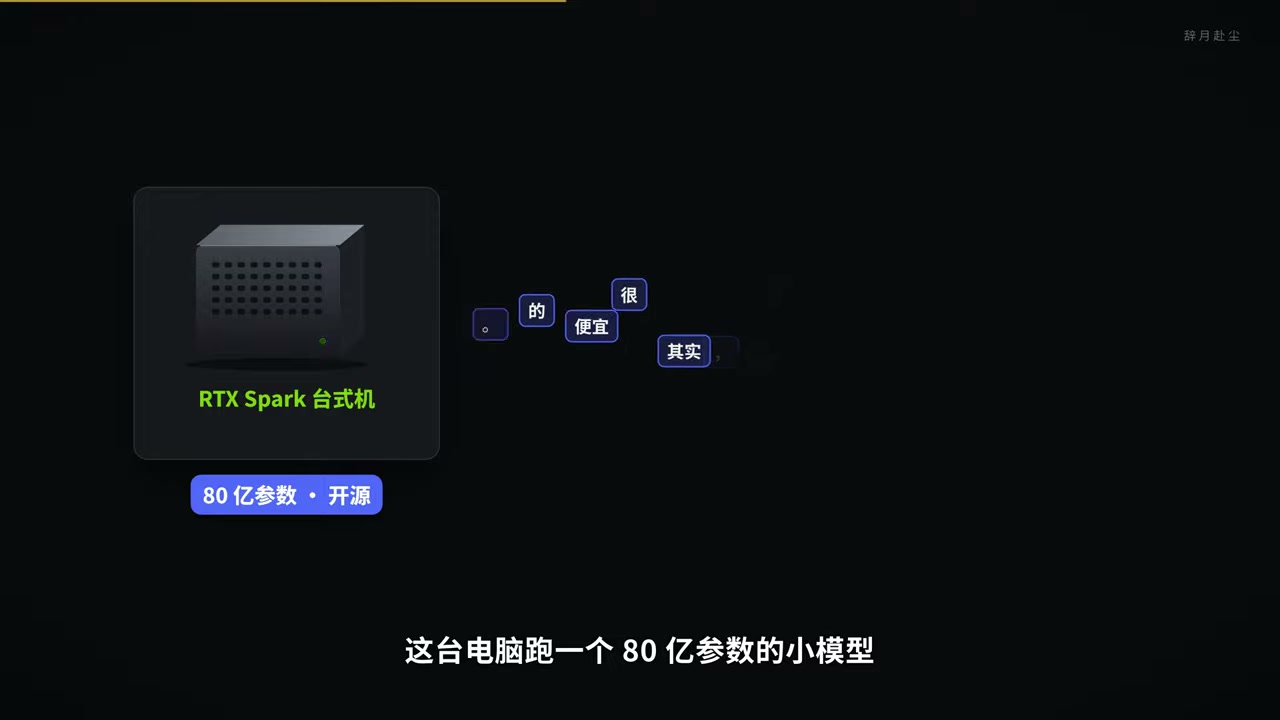
At that rate, running around the clock without sleep, it would take nearly six years to break even—and that does not even include electricity.
If the goal is to save money, this computer will never pay for itself.
VI. So Why Does It Sell? NVIDIA Is Not Selling Compute
Look at how NVIDIA itself describes the machine: purpose-built for AI agents and capable of running 120-billion-parameter models. The story it wants to sell is—you have an AI assistant living inside your computer, working for you around the clock, with data that never leaves your own machine.
Whether that story holds comes down to just one thing: where does the model come from?
Go back to 1979. In the early days of the personal computing boom, computers lived in machine rooms and queued for access. You paid by the hour and had to wait to use one.
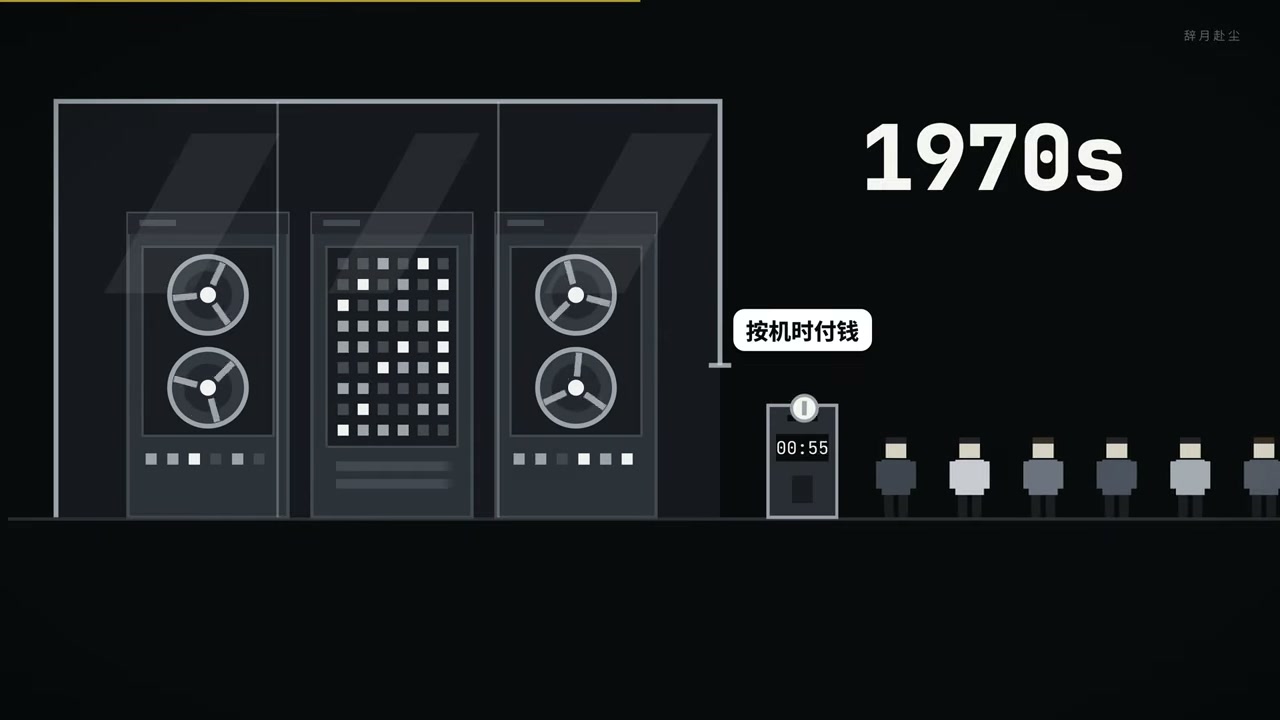
In 1979, electronic spreadsheet software appeared on the Apple II, and many people brought a computer home specifically to use it. Computers became personal because there was good software that could be installed on your own machine.
AI’s first few years were exactly the opposite: the best models all lived in someone else’s cloud. You could only pay by the token and could not download them. Back then, what could you do with a 128GB laptop? Play games.
VII. DeepSeek Printed the Treasure Map and Handed Out Flyers
The turning point arrived in January 2025. DeepSeek released R1, whose reasoning capabilities matched OpenAI’s o1, and put the weights online under an MIT license for anyone to download. For a time, the site was swamped: “Servers are busy, please try again later.” The official website could not handle the traffic, so people took matters into their own hands. Self-hosted DeepSeek deployments spread everywhere—mostly smaller distilled versions, but for many it was the first time they had run a large model on their own PC.
Even more importantly, it really did not hide anything:
- During Open Source Week, it released low-level code for five consecutive days
- In April this year, it released the V4 weights as well
- On October 20, it even open-sourced DeepInfer, the inference framework used by its own online service, and put the tidied-up project on GitHub
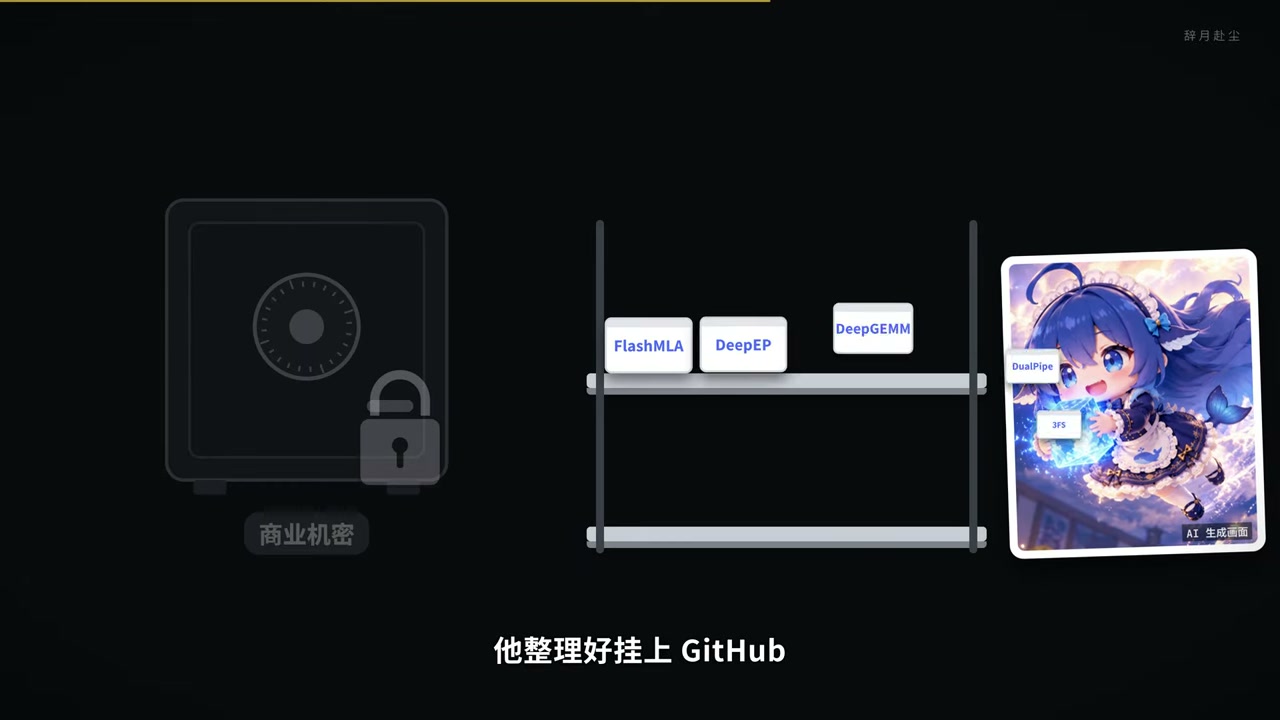
Netizens called it “Genshin Impact,” and that is not an exaggeration. Even OpenAI began to sit up and take notice: Sam Altman said the company had been “on the wrong side of history” when it came to open source, and six months later it released an open-source model of its own. At CES, Jensen Huang also singled out R1, calling it the first open-source reasoning model and saying it had astonished the world.
Back to the question: why did the “Chopper” suddenly become so generous and pack a laptop with 128GB?
Because now there is something to install. The RTX Spark demonstrations use open-source models such as Nemotron and Qwen. Without a model you can download, that 128GB is just dead weight.
Of course, the knife has not truly been put away: memory prices rose this year, and the 128GB DGX Spark jumped from ¥27,000 to ¥47,000; a cheaper 64GB version also launched. The knife simply moved to a different target.
VIII. As Open-Source Models Get Cheaper, NVIDIA Becomes More Valuable
Someone may ask: if open-source models are both powerful and cheap, shouldn’t that hurt NVIDIA? That is exactly what the market thought at the time.
On January 27, 2025, DeepSeek reached No. 1 on the US App Store’s free chart. People did the math on the final training cost of V3 and concluded, “Who would still buy all those GPUs?” NVIDIA’s share price fell 17% that day, erasing nearly ¥4 trillion in value and setting the record for the largest single-day drop per share.
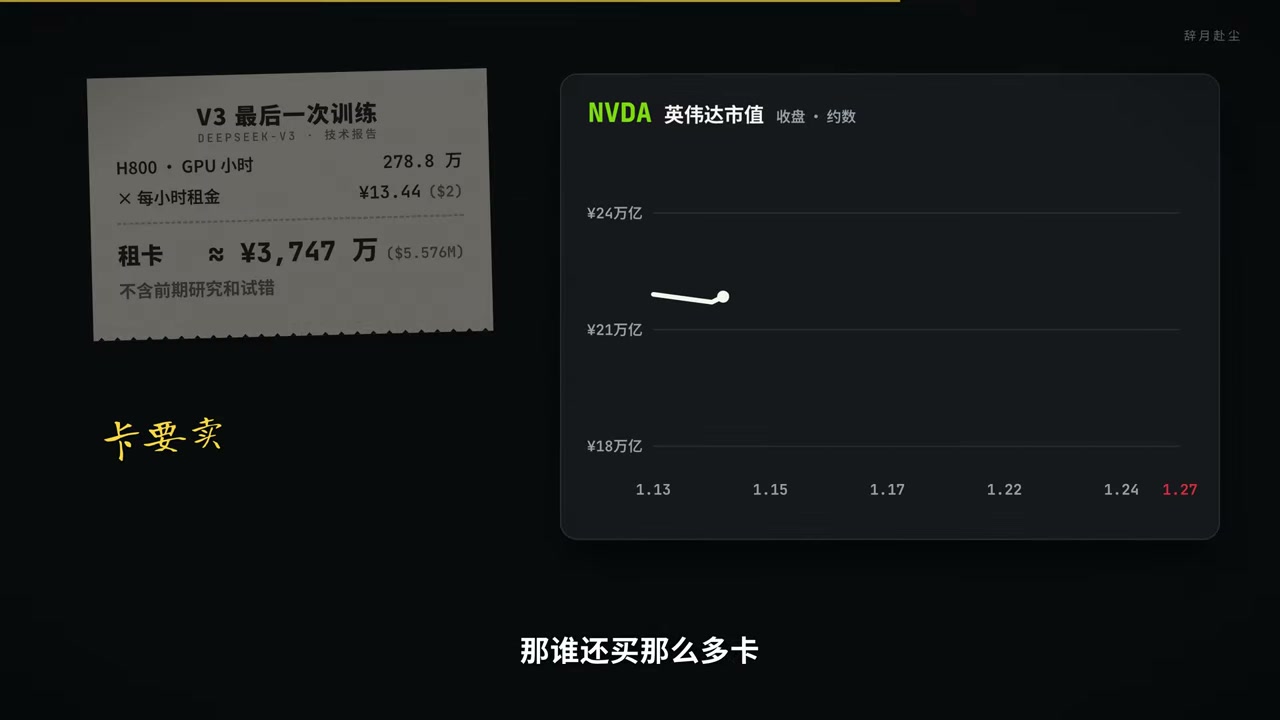
But in 1865, economist Jevons observed that the more coal-efficient the steam engine became, the more coal Britain burned. Once something gets cheaper, more people use it. And that is exactly what happened: reasoning models can chew through thousands of tokens, so usage surged; at GTC, Jensen said the compute required was easily 100 times the estimate from a year earlier. By early October this year, NVIDIA’s market cap had climbed to nearly ¥39 trillion, roughly twice its value on the day of the crash.
Jensen has a famous line: “The more you buy, the more you save.”
What Liang proved is the reverse: the more you save, the more you buy.
Personal AI PCs scale this logic even further: data-center GPUs are sold to companies, while PCs are sold to everyone.

More than 280 million PCs are sold worldwide every year. Even if only a small percentage include an NVIDIA AI chip, that is a major new business—provided people have good models they can download and run.
IX. Why Hasn’t NVIDIA Made Its Own CPU in the Past 30 Years?
Jensen Huang knows better than anyone how important PCs are. At Microsoft’s launch event on October 7, 2026, he said NVIDIA was founded because of Windows.
Yet for more than 30 years, NVIDIA has sold only GPUs inside PCs; CPUs have remained in the hands of Intel and AMD.
It is not that the company never considered it. In 2020, NVIDIA tried to acquire AMD for more than ¥260 billion, but regulators around the world blocked the deal, and it collapsed in 2022. Unable to buy its way in, NVIDIA took another route: co-developing the CPU with MediaTek while designing the GPU itself, then combining them into GB10. It first put GB10 into DGX Spark so developers could try it, then teamed up with Microsoft to put it into Windows laptops. At the same time, NVIDIA invested more than ¥33 billion in Intel to co-develop an x86 chip with RTX graphics.
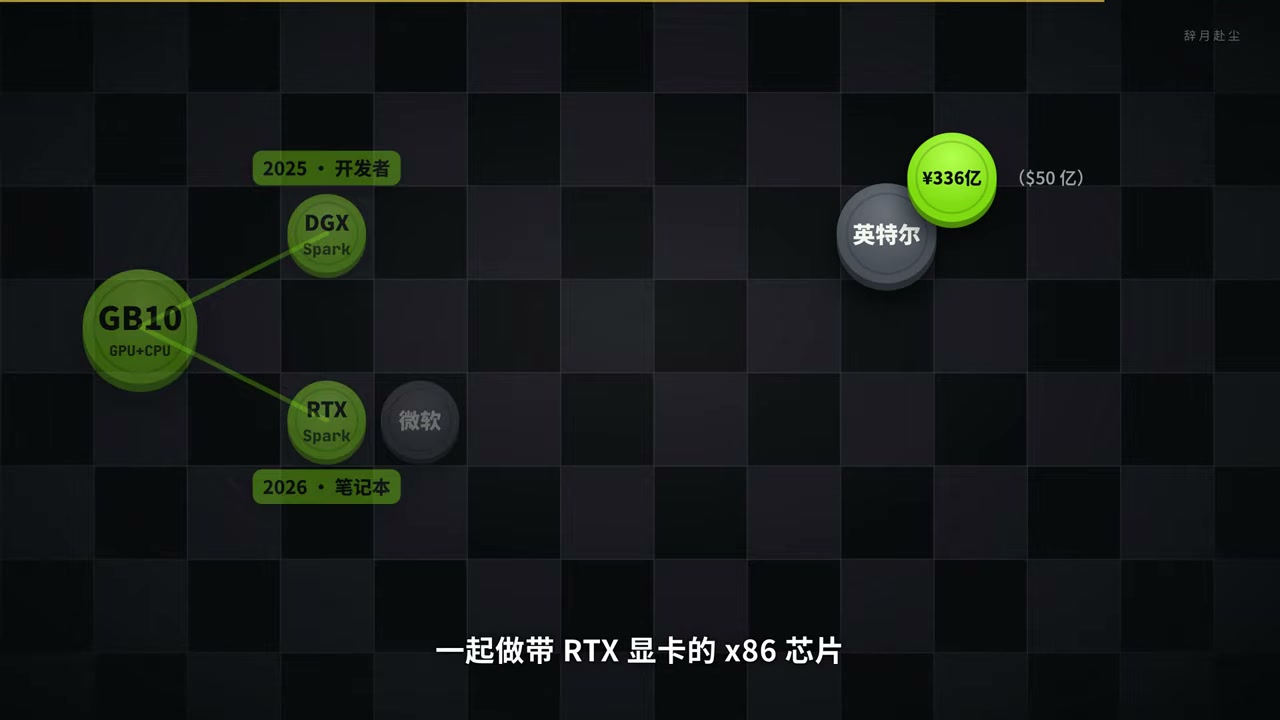
Whether it is AMD or x86, there has to be an NVIDIA inside.
The competition is strong, too: Apple’s M5 Max also has 128GB, around twice the memory bandwidth, and a stronger CPU; AMD has a 128GB Strix Halo; and Qualcomm has been working on Windows on Arm for years.
NVIDIA’s strongest card remains CUDA—AI code written on a laptop moves to the data center on the same software stack.
X. Should You Buy? Two Groups, Two Answers
If your primary workload is rendering or another heavy-throughput task, the math is already settled: renting a GB10 costs more than 40% less than renting two L40S GPUs, but it is nearly 7× slower; buying outright for ¥40,000–80,000 takes eight months to break even, and you have to live with an hour and a half becoming 10 hours. Unless you specifically need to render scenes that will not fit into 48GB of VRAM, buying one just for rendering is difficult to justify.
If you use AI as an everyday productivity tool, the conclusion is completely different. With 128GB of unified memory shared by the CPU and GPU, this follows a path Apple has already proven in recent years—run large models and major projects without worrying about VRAM. Similar uses of UNIFIED MEMORY already have mature solutions in the local-LLM community, such as using VRAM, RAM, and SSD tiered scheduling to run a 125B model in the Strata hands-on test, or fitting a 70B model into 4GB of VRAM with AirLLM’s layered streaming; Apple’s unified-memory approach has also been validated in the MiniMax H3 × Draw Things hands-on test.
The only prerequisite for this path is: the software has to keep up. Microsoft and a number of software companies say they will move mainstream applications to Windows on Arm as soon as possible. Photoshop and Premiere already run natively—but “runs” and “runs fast” are two different things. Before buying, check how the handful of applications you use every day actually perform on Windows on Arm.
Summary
Only two kinds of people can make sense of this machine’s economics: those who earn their living from compute, and those who earn their living from models.
For the former, RTX Spark is a competent but absurdly slow rendering machine—renting saves more than 40%, buying takes eight months to break even, and you have to accept renders that are 7× slower.
For the latter, 128GB of unified memory is the key: it makes “moving a model into your own computer” make sense at the hardware level for the first time. And after DeepSeek began releasing its weights, code, and inference framework one by one, personal computers finally had models they could accommodate—this is the real source of demand for RTX Spark.
So, if this computer sells well, the person it should really thank is Liang, not Huang. Jensen sold shovels during the gold rush, while someone else printed the treasure map and handed out flyers everywhere. How could the shovels fail to sell?

Interestingly, the two statements are two sides of the same coin: the more you buy, the more you save; the more you save, the more you buy. The real fuel driving this round of AI hardware is not faster chips, but cheaper open-source models.
All data in this article comes from hands-on testing in a self-built Blender rendering environment. The scenes, parameters, and billing breakdown are provided above, and the conclusions apply to comparable workloads. Since rendering backends differ significantly between GPUs, consider your own real-world scene before making a purchasing decision.
If you also run large models locally, see the Strata hands-on test running a 125B model with 64GB of memory and a 16GB GPU, or the technical breakdown of AirLLM’s layered streaming.